Platform Automation
Known rules and discovered evidence become governed pipelines, models and mappings. The path is deterministic, the proposed change is visible, and your team stays in control of what is applied. Same input, same output, and the core runs with the AI switched off.
Why automation alone is not enough
Automation only pays off when it preserves the architecture, validates its output and gives reviewers enough evidence to decide with confidence.
Standards live in people's heads. Naming, history, keys and quality vary with the engineer and the pressure of the sprint.
Well-understood integration and modelling work is rebuilt across sources, projects and clients.
Proposed changes arrive without context. A suggestion is hard to trust when reviewers cannot see its evidence, dependencies or impact.
In the product
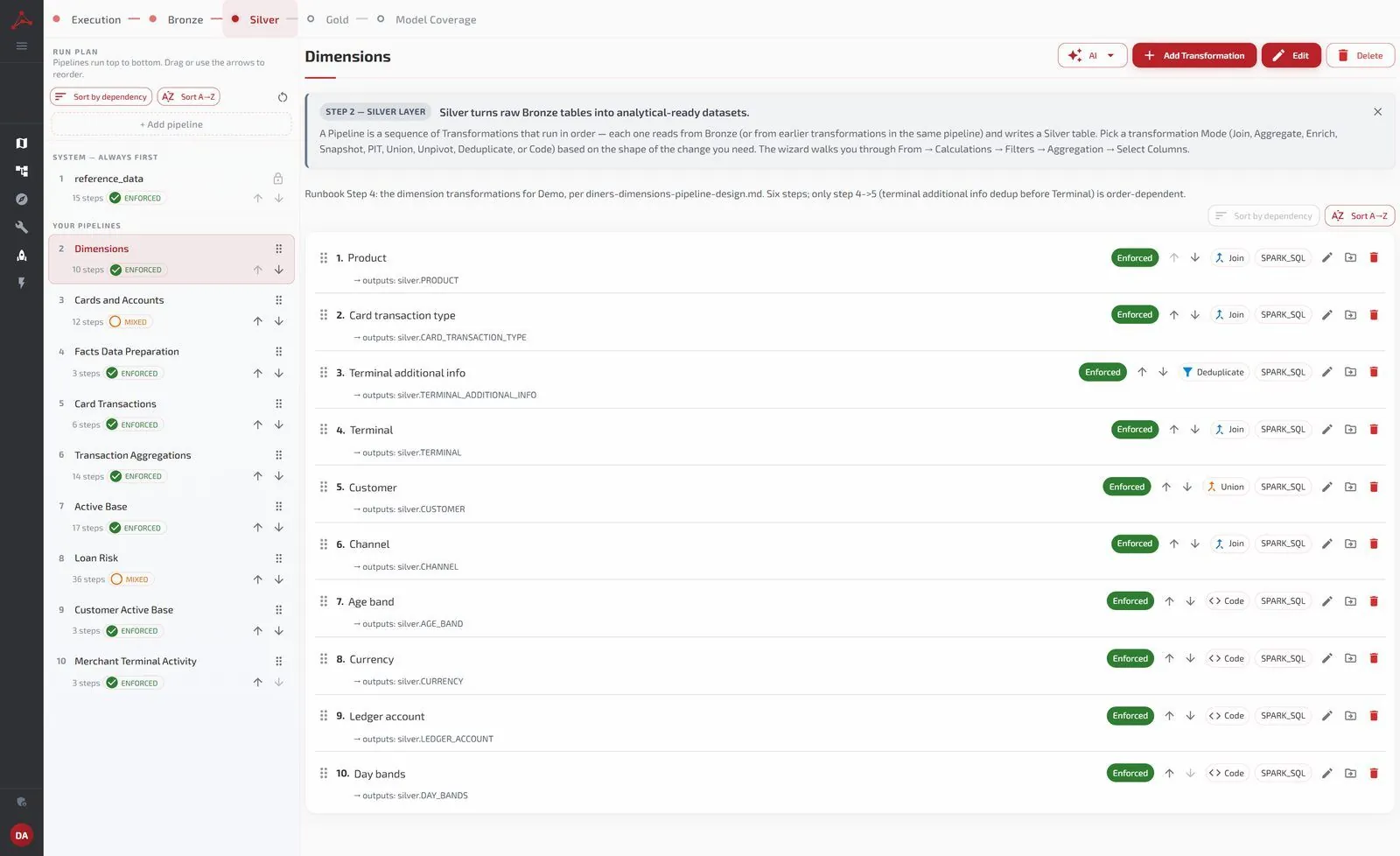
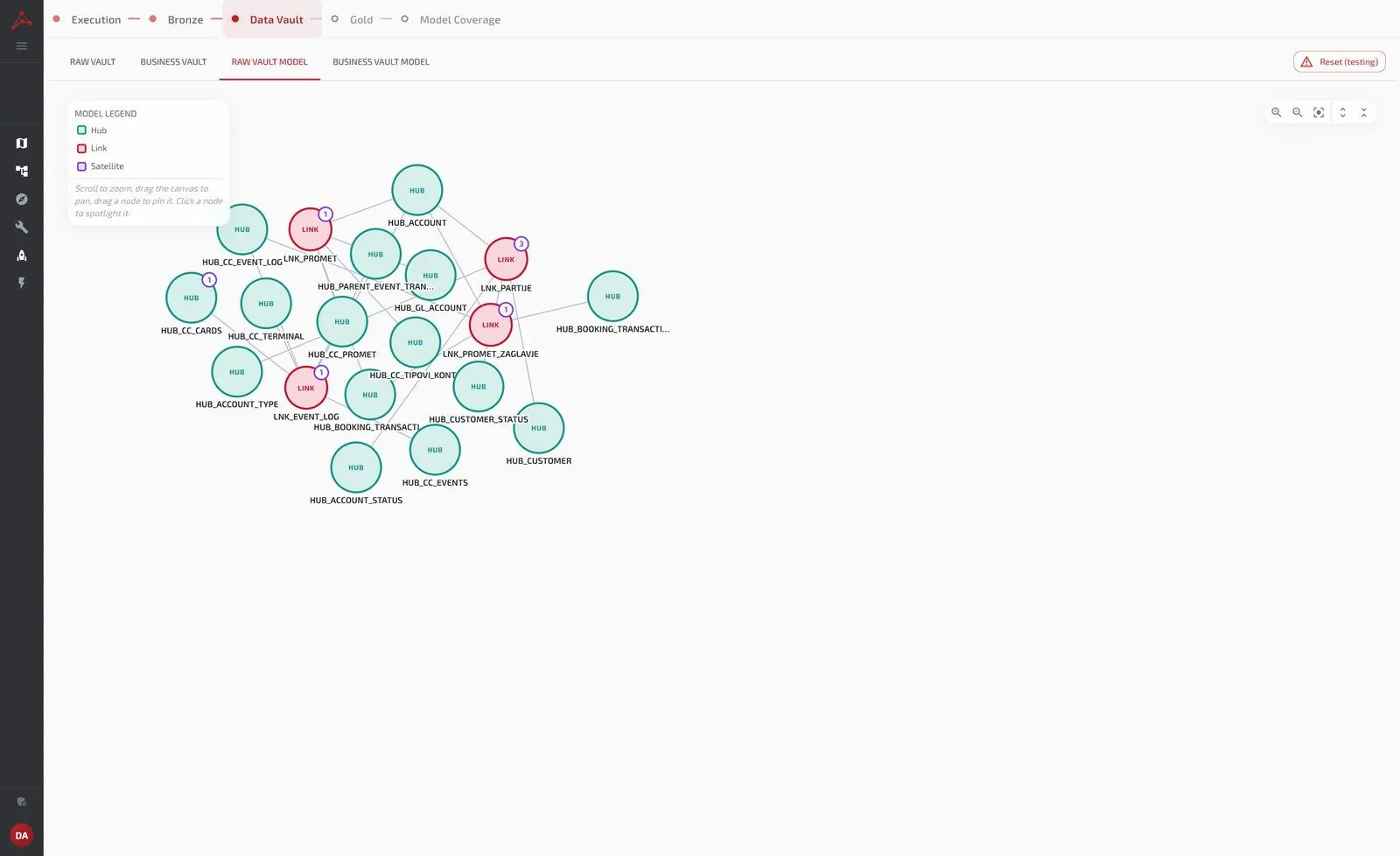
What the automation produces: the pipelines and enforced transformations built from the model, and a Data Vault model derived from the source tables for estates that run on a vault.


The workflow
Automation follows existing, validated services. It does not create a second, less-governed write path.
Built to behave
The objective is a living foundation, one that is rebuilt from declared definitions, explained and governed as your systems change.
Same inputs, same governed output. Parsing, mapping, pipeline building, lineage and impact analysis work without an AI model call.
Nothing material appears silently. Proposed changes land with provenance and confidence, for approval, editing or reasoned rejection.
Column-level relationships expose dependent models, measures and value cases before a source change is applied.
Compare the new source structure with the last known version, rebuild only the affected objects, and return them to review.
Illustrative source change
When a source system changes, Decision Intelligence identifies the difference, traces what depends on it and rebuilds only the affected parts.
New structure compared: an account status field changes type and code set.
Dependencies traced: three models and two measures are affected.
Objects rebuilt: only the affected path is rebuilt and validated.
The reviewer decides: impact and evidence accompany the proposal.
The foundation built from declared definitions carries the ontology from Modelling, keeps its meaning in Knowledge & Context, and feeds the measures that Controlling and Decision Activation act on.
Next step
Bring one business request that is still waiting for delivery. We will show how Decision Intelligence builds the pipeline, the checks and the release path for it from declared definitions.

We use cookies and similar technologies to see how the site is used, so we can improve it. Choose "Accept all", or open preferences to pick which categories you allow. Necessary cookies are always on; anything else runs only with your consent, and you can change or withdraw it at any time.