Platform Automation

Build the foundation from declared definitions. Enforce the standard.

Known rules and discovered evidence become governed pipelines, models and mappings. The path is deterministic, the proposed change is visible, and your team stays in control of what is applied. Same input, same output, and the core runs with the AI switched off.

Why automation alone is not enough

Faster code is not the same as a repeatable system.

Automation only pays off when it preserves the architecture, validates its output and gives reviewers enough evidence to decide with confidence.

Inconsistent

Standards live in people's heads. Naming, history, keys and quality vary with the engineer and the pressure of the sprint.

Repetitive

Well-understood integration and modelling work is rebuilt across sources, projects and clients.

Risky

Proposed changes arrive without context. A suggestion is hard to trust when reviewers cannot see its evidence, dependencies or impact.

In the product

Built from declared definitions, reviewed, enforced.

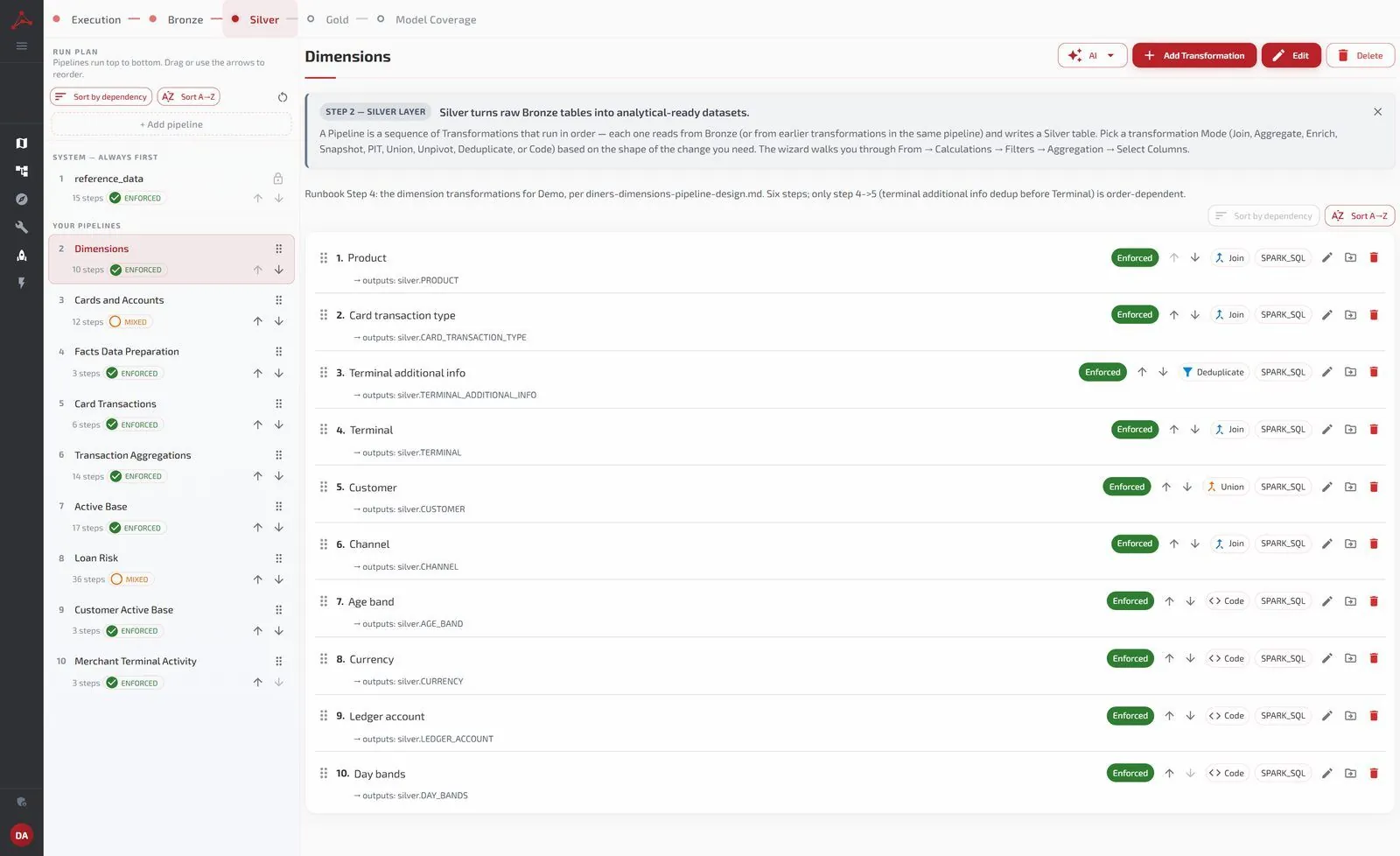
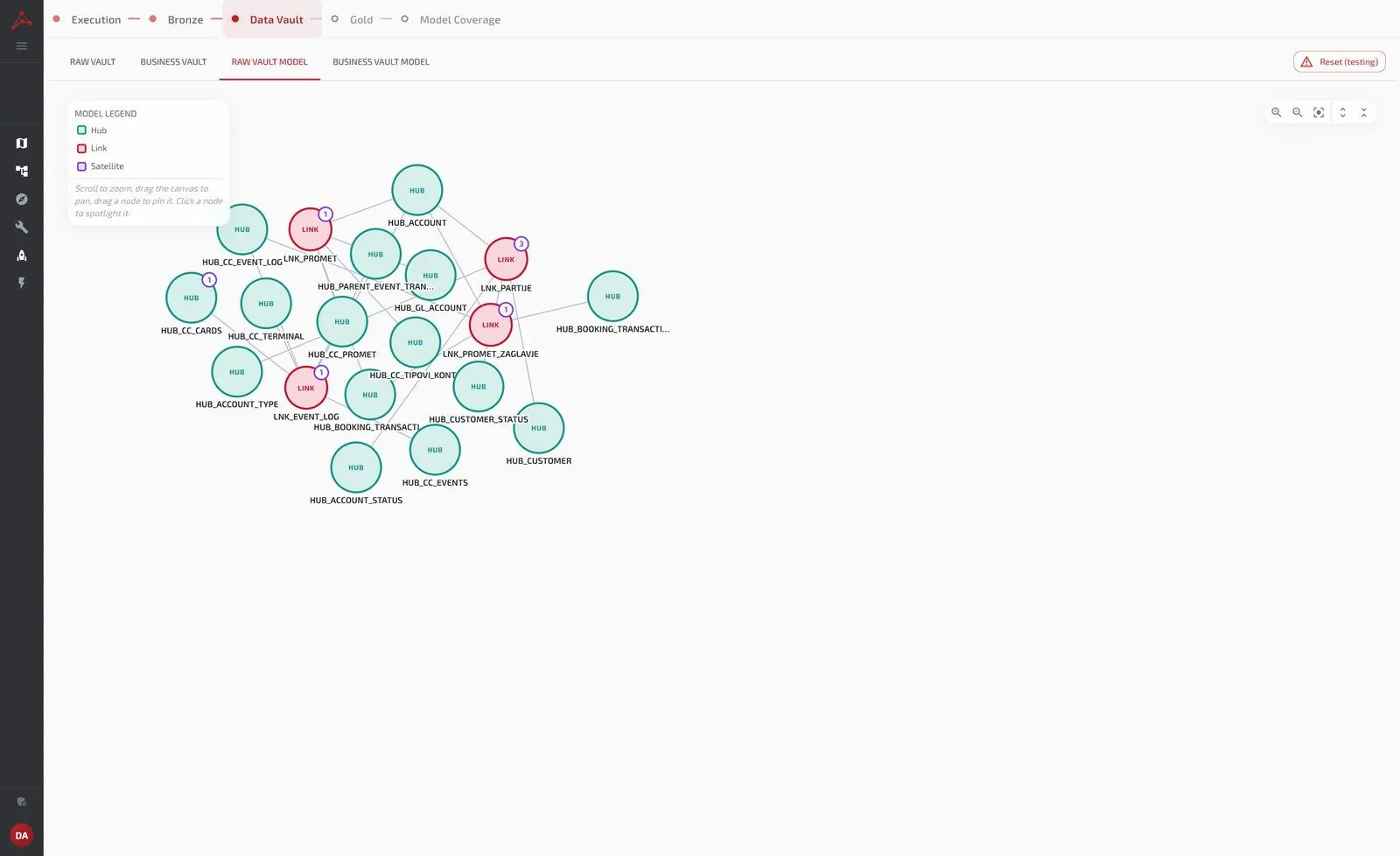
What the automation produces: the pipelines and enforced transformations built from the model, and a Data Vault model derived from the source tables for estates that run on a vault.

Pipeline Studio
Pipeline StudioPipelines run in dependency order; each transformation is enforced from a versioned definition and reviewable before release.
Data Vault model
Data Vault modelThe vault model derived from the source tables, enforced from their definitions. For the technical reader: the Raw Vault and Business Vault are modelled here and built from declared definitions like every other layer.

See the full product tour

The workflow

Automate the repeatable work. Preserve human judgment.

Automation follows existing, validated services. It does not create a second, less-governed write path.

1
Observe
Learn how you work. Data Masters Decision Intelligence learns your current decision making and data usability patterns before anything is built.
2
Map
Propose with evidence. Business keys and source-to-model mappings arrive as proposals, with confidence and supporting evidence.
3
Build
From explicit rules. Governed transformations and models across the layers, with the development decisions already prepared for you.
4
Validate
The same checks, always. Structural, historisation, lineage and publish checks run identically on every object Decision Intelligence builds.
5
Approve
Human control. Preview the impact, edit if needed, and apply only after the accountable reviewer accepts.

Built to behave

Automation that behaves like infrastructure.

The objective is a living foundation, one that is rebuilt from declared definitions, explained and governed as your systems change.

Determinism

Same inputs, same governed output. Parsing, mapping, pipeline building, lineage and impact analysis work without an AI model call.

Proposal inbox

Nothing material appears silently. Proposed changes land with provenance and confidence, for approval, editing or reasoned rejection.

Impact preview

Column-level relationships expose dependent models, measures and value cases before a source change is applied.

Controlled recovery

Compare the new source structure with the last known version, rebuild only the affected objects, and return them to review.

The chain

A foundation the other modules can act on.

The foundation built from declared definitions carries the ontology from Modelling, keeps its meaning in Knowledge & Context, and feeds the measures that Controlling and Decision Activation act on.

Next step

Where does delivery slow down today?

Bring one business request that is still waiting for delivery. We will show how Decision Intelligence builds the pipeline, the checks and the release path for it from declared definitions.