Controlling

Which ten customers are your least profitable, after cost to serve?

If the honest answer is a guess, this is where to look first. Driver-based cost allocation locates profit per customer, product and site: governed, auditable, and reconciled to the profit and loss your CFO signs. This is the second stage of every decision in Data Masters Decision Intelligence: priced, the value at risk after cost to serve, before anything is activated.

What it answers

The questions it answers

Revenue is visible in any report. Profit is not, because cost lives somewhere else. Allocation puts it where it belongs, and the ranking changes.

Which customers make money?

After delivery, service, financing and overhead are allocated, the largest customer is often not the most profitable one. Discounts and terms should know that. In a bank: after funding cost, cost of risk and cost to serve, with fee waivers and pricing exceptions on the table.

Which products carry the margin?

After allocated costs, the best-seller is often not the best earner. Price, promote and stock with the real number, net of the cost to serve. In a bank: account and card products after cost of risk.

Which discounts are earned?

Next year's terms, decided on profit per customer after cost to serve. In a bank: which branch and channel earn their cost, and which pricing exceptions do.

Understood, priced, activated

The second stage of the same decision.

Every value case is first understood, with a trusted number and a named owner. Controlling prices it: the value at risk after cost to serve, per customer, product and site, reconciled to the reported profit and loss. Activation, the third stage, acts on it, in the same product and on the same licence.

In the product

Allocation, as Decision Intelligence runs it.

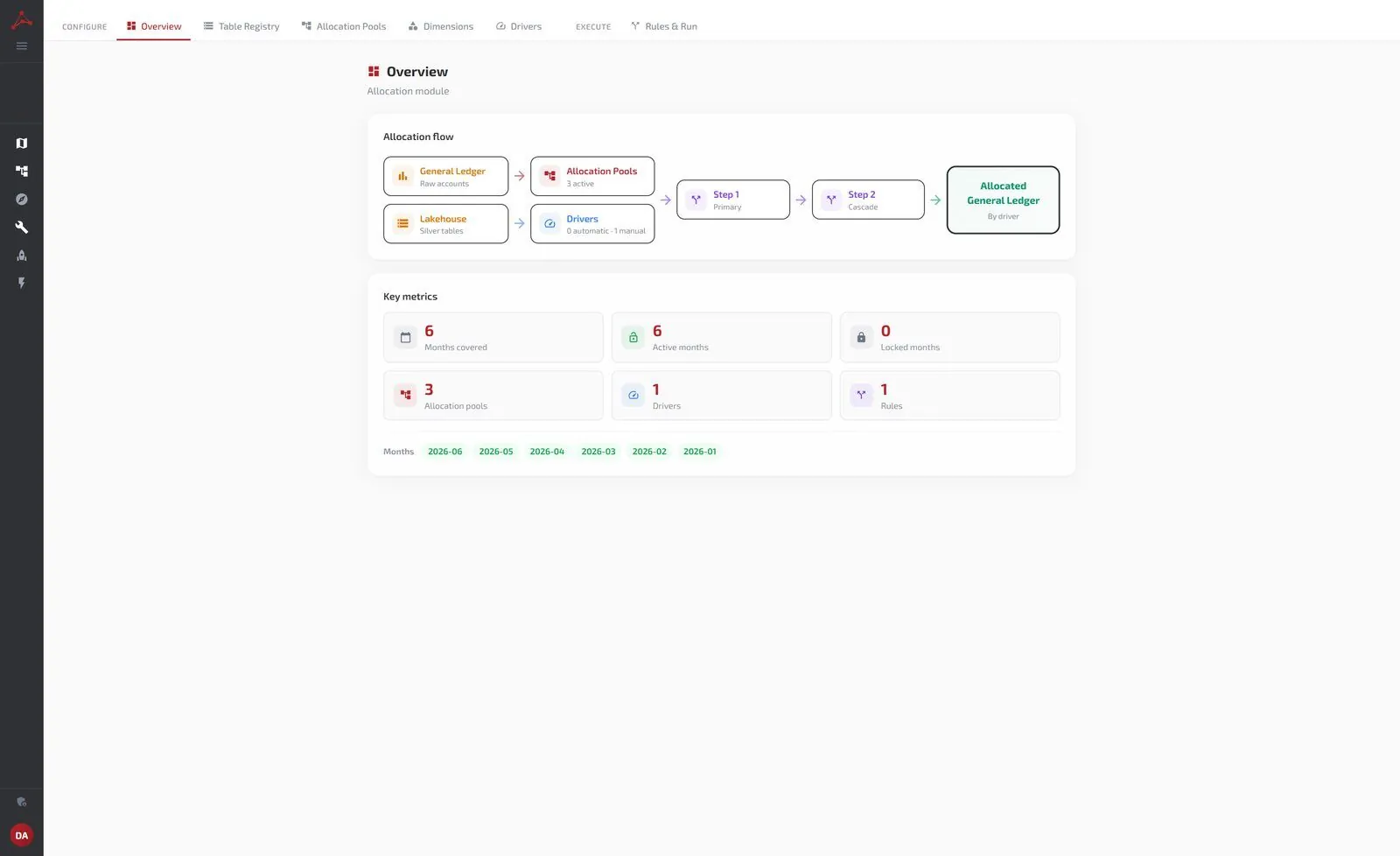
The allocation module of a demo project: the general ledger, the pools, the drivers and the rules that locate profit after cost to serve.

Financial Allocation
Financial AllocationThe allocation flow from the general ledger through pools and drivers to the allocated ledger, with the periods covered and the rules in force.

See the full product tour

Trust by construction

How it stays trusted

Transparent drivers

Every allocation follows a declared driver and a versioned rule. No black box: the path from cost line to customer is inspectable, step by step.

Reconciled to the P&L

The allocated total matches the reported profit and loss. If it does not reconcile, it does not ship.

Governed like everything else

Definitions remain versioned, lineage stays connected to governed data assets, and each allocation-driven action keeps a decision record.

The chain

Located profit becomes action

Controlling is an input to decisions: repricing prepared for approval, discount terms flagged for renegotiation, unprofitable patterns surfaced as tasks. The same one-click approval and evidence as every other decision in Decision Intelligence.